


Dr. Karim Sarhane Discusses Global Standards in Surgery

About Dr. Karim Sarhane
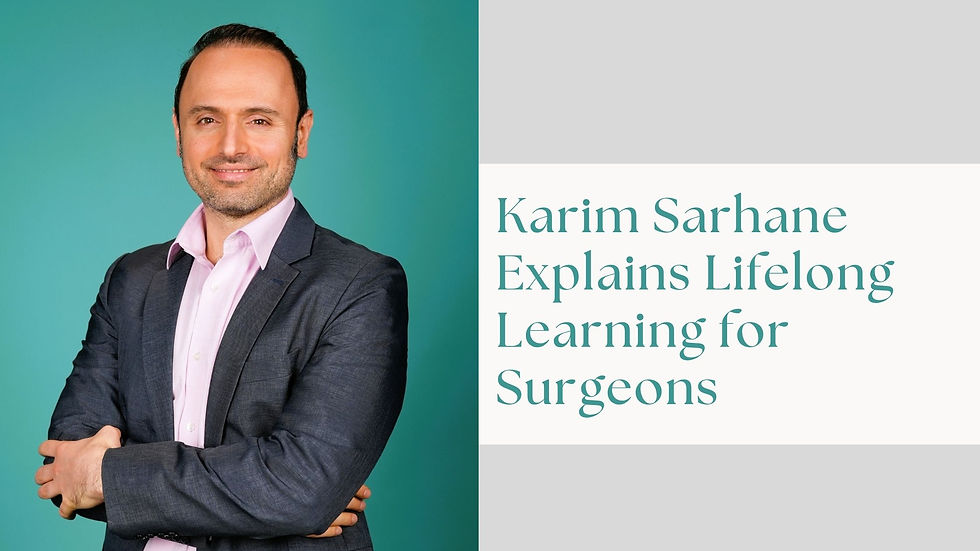
Dr. Karim Sarhane is a US-trained consultant general and advanced laparoscopic surgeon and surgeon-scientist working in the medical & health education industry. His professional work connects clinical surgery, minimally invasive techniques, research, and surgical education. His background includes general surgery training at the University of Toledo and research experience at Johns Hopkins University. Dr. Karim Sarhane also focuses on advanced laparoscopic and robotic-assisted surgery while contributing to medical education and professional mentorship.
What Global Standards Mean in Surgery
Dr. Karim Sarhane highlights that global standards in surgery are not limited to sophisticated equipment or advanced operating rooms. They involve consistent practices that support patient safety, accurate diagnosis, appropriate surgical planning, effective teamwork, infection prevention, and reliable postoperative care.
Dr. Karim Sarhane believes that surgical standards should provide a dependable framework while allowing surgeons to consider each patient's individual condition. This balance is particularly important in general surgery, surgical oncology, laparoscopic procedures, and other complex operations.
The World Health Organization's Surgical Safety Checklist provides a practical example. Its 19 items cover key stages before anesthesia, before skin incision, and before the patient leaves the operating room. The WHO developed the checklist to improve communication, teamwork, and adherence to important safety practices.
Why Patient Safety Standards Matter
Dr. Karim Sarhane believes that patient safety depends on systems as much as individual surgical skill. A well-designed process can help teams identify important risks before they become complications.
Preoperative planning: Dr. Karim Sarhane highlights reviewing the diagnosis, medical history, investigations, surgical indication, and potential risks before an operation.
Team communication: Dr. Karim Sarhane believes surgeons, anesthesiologists, nurses, and other professionals should clearly understand the planned procedure and possible concerns.
Intraoperative safety: Dr. Karim Sarhane emphasizes careful technique, appropriate technology, sterility, and attention to unexpected findings.
Postoperative monitoring: Dr. Karim Sarhane highlights early recognition of complications and structured follow-up as important parts of surgical care.
These principles align with the WHO's broader approach to safe surgery, which emphasizes infection prevention, safe anesthesia, effective surgical teams, and measurement of surgical services.
How Standards Improve Surgical Practice
Dr. Karim Sarhane believes global standards are most useful when they become part of everyday clinical practice rather than remaining written policies. This means surgical teams need education, communication, leadership, feedback, and regular review of outcomes.
A real-world example is the WHO Surgical Safety Checklist study involving hospitals in eight cities, including New Delhi, India, as well as sites in Canada, Jordan, New Zealand, the Philippines, Tanzania, the United Kingdom, and the United States. Following implementation, major complications decreased from 11% to 7%, while inpatient deaths fell from 1.5% to 0.8%.
Dr. Karim Sarhane highlights this case because it demonstrates how a structured safety process can work across very different healthcare environments. The WHO also recommends adapting the checklist to local practice while preserving its essential safety principles.
Standardization Across Different Healthcare Settings
Dr. Karim Sarhane believes the international experience with the WHO checklist offers an important lesson for modern surgical practice. Hospitals may differ in resources, staffing, technology, and patient populations, but fundamental safety principles remain relevant.
The checklist requires teams to confirm essentials such as patient identity, procedure and surgical site, allergies, anesthesia readiness, anticipated critical events, sterility, instrument counts, specimen labeling, and postoperative concerns.
Dr. Karim Sarhane believes this approach strengthens accountability without replacing clinical judgment. For advanced laparoscopic and robotic surgery, the same principle applies: technology can support precision, but careful patient selection, preparation, communication, and surgical judgment remain central to safe care.
How Dr. Karim Sarhane Applies These Principles
Dr. Karim Sarhane highlights that maintaining surgical standards requires continuous learning. His experience in clinical surgery, research, advanced minimally invasive procedures, and medical education informs his view that surgeons should remain engaged with developing evidence and evolving surgical techniques.
Clinical practice: Dr. Karim Sarhane emphasizes applying established surgical principles while considering each patient's needs.
Medical education: Dr. Karim Sarhane believes teaching and mentorship help strengthen consistency among future surgical professionals.
Research: Dr. Karim Sarhane highlights the role of scientific evidence in evaluating surgical techniques and improving patient care.
Technology: Dr. Karim Sarhane believes advanced laparoscopic and robotic technologies should be adopted when they provide meaningful clinical value.
Frequently Asked Questions
What are global standards in surgery?
Dr. Karim Sarhane explains that global surgical standards are structured practices designed to support safe, consistent, evidence-informed patient care.
Why are surgical checklists important?
Dr. Karim Sarhane highlights that checklists help surgical teams consistently complete critical safety steps. WHO reports that its Surgical Safety Checklist has been associated with reductions in surgical complications and mortality.
Can global standards be adapted to local hospitals?
Yes. Dr. Karim Sarhane believes standards should maintain their essential safety principles while being adapted to the resources, workflow, and clinical needs of individual healthcare settings. WHO similarly encourages local adaptation of its surgical checklist.
Do global standards replace surgical judgment?
No. Dr. Karim Sarhane believes standards support clinical judgment rather than replace it. Surgeons still need to assess the individual patient and make decisions according to the clinical situation.
Conclusion
Dr. Karim Sarhane believes global standards in surgery provide a foundation for safer and more consistent patient care. His perspective combines clinical experience, advanced minimally invasive surgery, research, and medical education. For Dr. Karim Sarhane, the future of surgery depends not only on technological progress but also on strong safety systems, teamwork, evidence-based practice, education, and continuous improvement.


Comments