


Karim Sarhane Explains Lifelong Learning for Surgeons
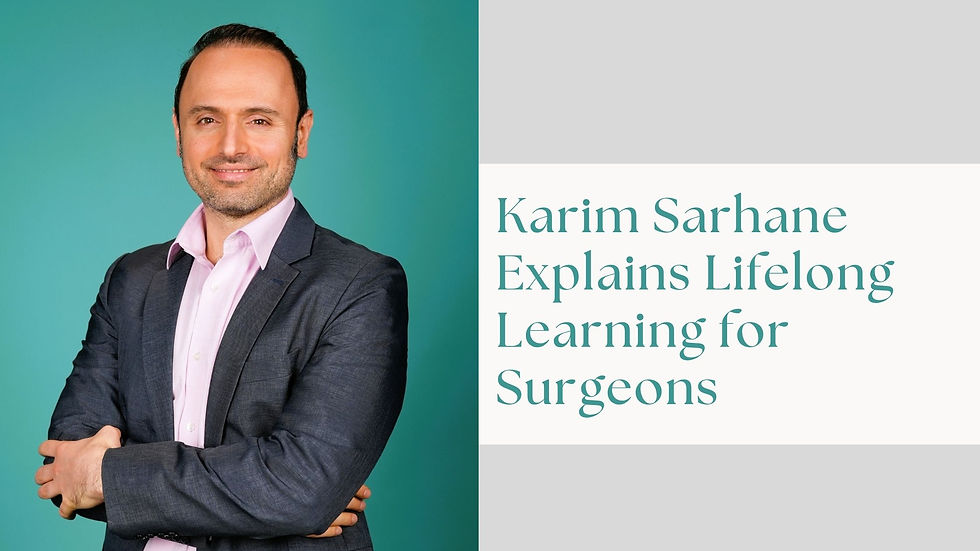
Karim Sarhane is a US-trained general and advanced laparoscopic surgeon whose career combines clinical surgery, research, surgical education, and continuing professional development. His background includes medical training at the American University of Beirut, research at Johns Hopkins University, and general surgery training at the University of Toledo. His academic work has included research in nerve regeneration, robotic surgery, breast surgery, and other areas of surgical science.
For Karim Sarhane, lifelong learning is not separate from surgical practice. It is part of becoming a better surgeon. Surgical techniques change, evidence develops, technology advances, and patient care becomes increasingly complex. Karim Sarhane believes surgeons must continue learning throughout their careers so that clinical decisions remain informed by current evidence and sound surgical judgment.
Why Lifelong Learning Matters in Surgery
Karim Sarhane highlights that completing residency or obtaining board certification does not mark the end of surgical education. Instead, it establishes the foundation for continued professional development.
Medical knowledge changes: Karim Sarhane believes surgeons need to regularly review new evidence, clinical guidelines, and research findings that may influence patient care.
Surgical technology evolves: Karim Sarhane’s academic work involving robotic and minimally invasive techniques illustrates why surgeons must understand new technologies while carefully evaluating their appropriate clinical use.
Experience must remain reflective: Karim Sarhane believes experience becomes more valuable when surgeons examine outcomes, learn from difficult cases, and remain open to improving established practices.
Lifelong learning can take many forms, including scientific reading, professional meetings, peer discussion, simulation, research, teaching, and reviewing surgical outcomes.
Karim Sarhane’s Research Experience Shows Continuous Learning
Karim Sarhane’s research career provides a practical example of how learning can continue beyond clinical training. During his time at Johns Hopkins, Karim Sarhane participated in research involving tissue engineering, nerve regeneration, transplantation, and reconstructive surgery. His published work also demonstrates an ongoing interest in examining difficult surgical questions through scientific investigation.
One published example is Karim Sarhane’s research on preoperative anemia and outcomes in immediate breast reconstruction. The study analyzed data from 10,958 patients, examining the relationship between anemia and postoperative outcomes.
This type of work illustrates an important part of lifelong learning: surgeons can use clinical questions and large datasets to better understand factors that may affect patient outcomes.
Case Studies From Karim Sarhane’s Academic Work
Karim Sarhane’s published research offers several examples of how continued investigation can expand surgical knowledge.
A notable example is Karim Sarhane’s work on robotic-assisted reconstructive techniques. His published chapter on robotic harvest of the latissimus dorsi muscle examined how robotic surgery could provide a minimally invasive approach while potentially reducing morbidity associated with traditional donor-site incisions.
Another example is Karim Sarhane’s research into nerve regeneration. His publications have examined approaches involving nanofiber constructs, growth factors, and other strategies intended to improve nerve repair and functional recovery.
These examples show how Karim Sarhane approaches learning through both clinical interests and scientific research. Rather than treating established techniques as permanent, Karim Sarhane’s academic work reflects the importance of asking whether surgical methods can be improved.
How Karim Sarhane Believes Surgeons Can Keep Learning
Karim Sarhane believes lifelong learning works best when it becomes part of a surgeon’s normal professional routine. Reading current literature can help surgeons recognize changes in evidence, while conferences and professional discussions expose them to different approaches.
Karim Sarhane also emphasizes the value of teaching. Explaining surgical principles to students and colleagues requires a surgeon to organize knowledge clearly and examine whether established concepts remain supported by evidence. His professional background includes research, teaching, and academic involvement, giving him experience across several dimensions of surgical education.
For Karim Sarhane, learning also means recognizing limitations. A surgeon does not need to adopt every new device or technique simply because it is available. Instead, Karim Sarhane believes new approaches should be evaluated carefully for evidence, safety, appropriate indications, and relevance to individual patients.
Frequently Asked Questions About Lifelong Learning for Surgeons
Why is lifelong learning important for surgeons?
Karim Sarhane explains that surgery is continuously developing. Ongoing education helps surgeons remain familiar with new evidence, techniques, technologies, and approaches to patient care.
Does surgical experience replace continuing education?
Karim Sarhane believes experience and education complement each other. Experience develops judgment, while continued learning helps ensure that judgment remains informed by current medical knowledge.
How can surgeons continue learning after residency?
Karim Sarhane’s professional experience demonstrates several pathways, including research, scientific publications, conferences, teaching, professional development, and careful evaluation of new surgical technologies.
What role does research play in surgical education?
Karim Sarhane’s research career demonstrates how scientific investigation can deepen a surgeon’s understanding of clinical problems. Research encourages surgeons to question existing assumptions and evaluate evidence systematically.
Conclusion
Karim Sarhane believes lifelong learning is a professional responsibility that continues throughout a surgeon’s career. His experience across clinical surgery, research, robotic and minimally invasive techniques, and academic work demonstrates how continuous education can shape surgical practice. For Karim Sarhane, staying curious, evaluating evidence, learning from experience, and sharing knowledge are essential parts of becoming a thoughtful and adaptable surgeon.


Comments